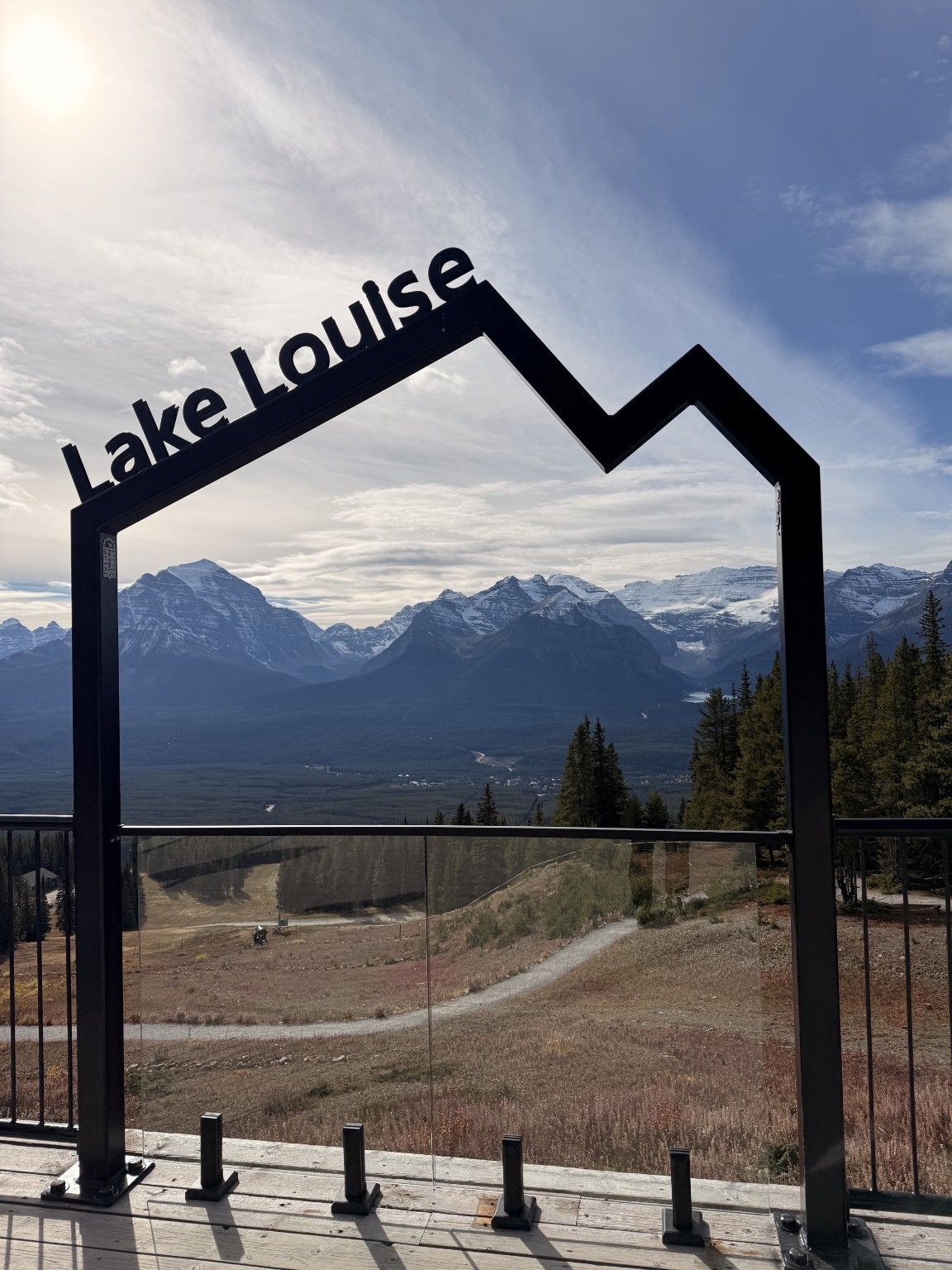
Japan was where our travels together began in 2013. We kept returning, particularly around Tokyo and Osaka, through the years before Covid and again afterwards. Our visits continued into this year. A four-week trip gave us a different amount of room from a quick city break, and these photographs reminded me why Japan kept staying on our list.
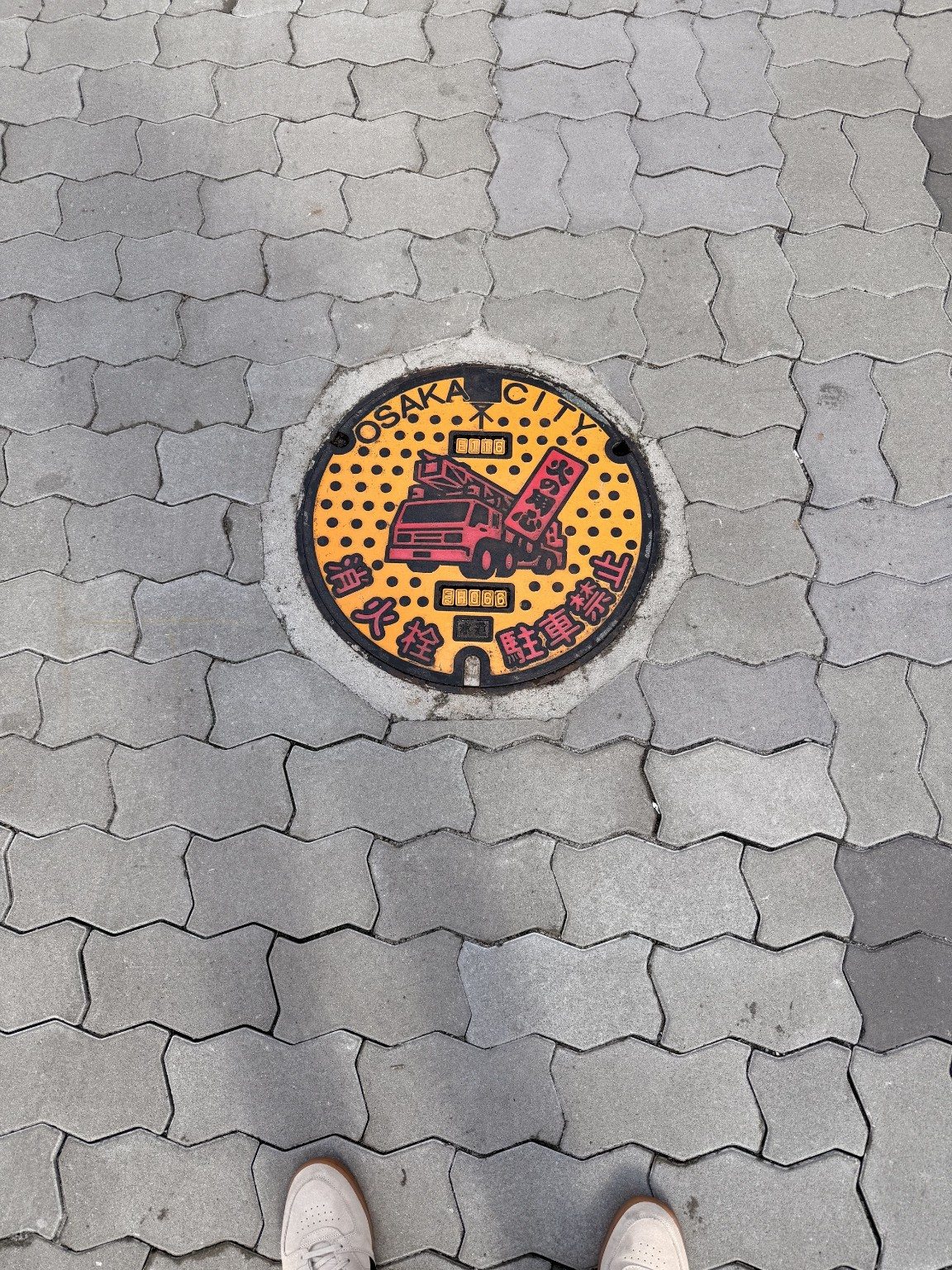
There was the obvious photograph to keep: Mount Fuji from the train window. There was also lunch on the fold-down table, a quieter lane with Edlyn in the picture, and a colourful cover in the pavement marked Osaka City. Together, they felt closer to the trip than a list of the biggest attractions would have. I wanted to keep the small things in the journal as well.
Four weeks between two familiar areas
Tokyo and Osaka were the areas we had returned to most often. Having four weeks meant we did not have to make every day a move. That mattered to the way we liked travelling now. When we were younger, we had two backpacks and wanted to cover as much ground as possible. With our daughter, we became more interested in choosing a base and exploring from there.
I still liked having plenty to see nearby. I just preferred having a choice about when to see it. A longer stay gave us space to enjoy being in a city without needing a major outing attached to every morning. It also meant the smaller details had a chance to stay with us. Looking back at the Osaka pavement photograph, I liked that we had stopped to notice something we could easily have walked over.
I have kept the practical route plans separate from this journal. They are the way I would organise another visit, rather than a reconstructed diary of exactly where we went on each of the twenty-eight days. The photographs are ours, and the parts I remember here belong to the trip. There is no need to turn them into a more precise timeline than we have recorded.
The quieter photographs stayed with me
Edlyn standing in the lane was one of the pictures I wanted to include. The buildings were close together, with signs and shutters at street level. It was a different view from the big, brightly lit streets that tend to represent Japan in travel plans. I liked having both kinds of photograph when we came home.
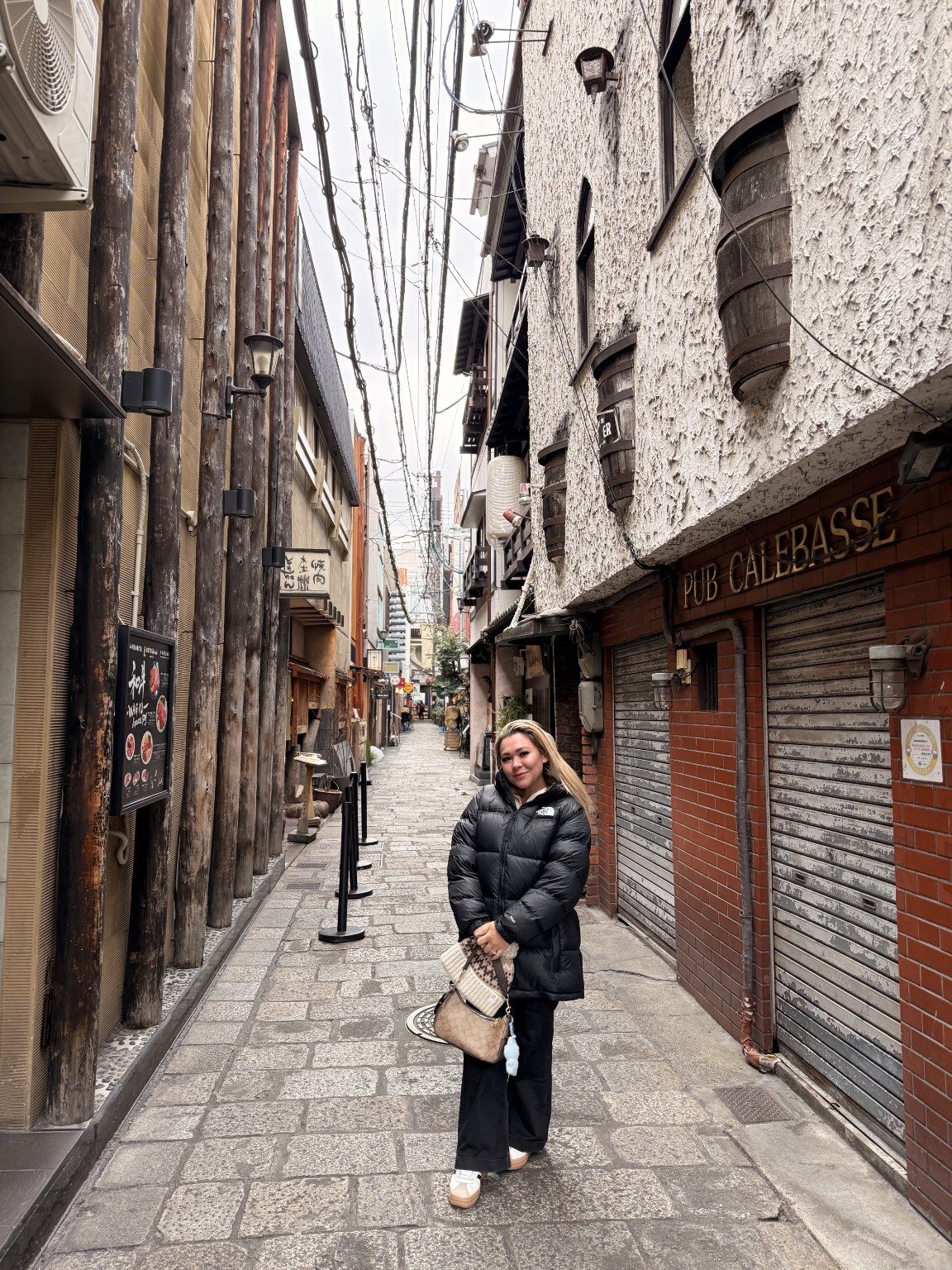
I have left the exact lane unnamed because we have not recorded its location here. The photograph still has a place in the story. It reminded me of the value of leaving enough time to walk rather than organising a trip entirely around named stops. That is something I would keep in a return visit, especially over four weeks.
A longer trip can become tiring if every day is planned like the only day you will ever have there. I would rather leave room for a neighbourhood we wanted to spend more time in than keep adding destinations simply because the calendar had space. Japan was already a place we knew we wanted to revisit. We did not need this trip to finish everything.
Lunch on the train was part of the journey
The bento photograph was another one I was glad we took. The tray table was down, the blue seat in front filled the background, and the box had its own little sections. Rice and several different bites made it feel like a proper meal within the journey. I cannot put a shop name or a price against that particular box now, but I can keep the photograph of what we actually had.
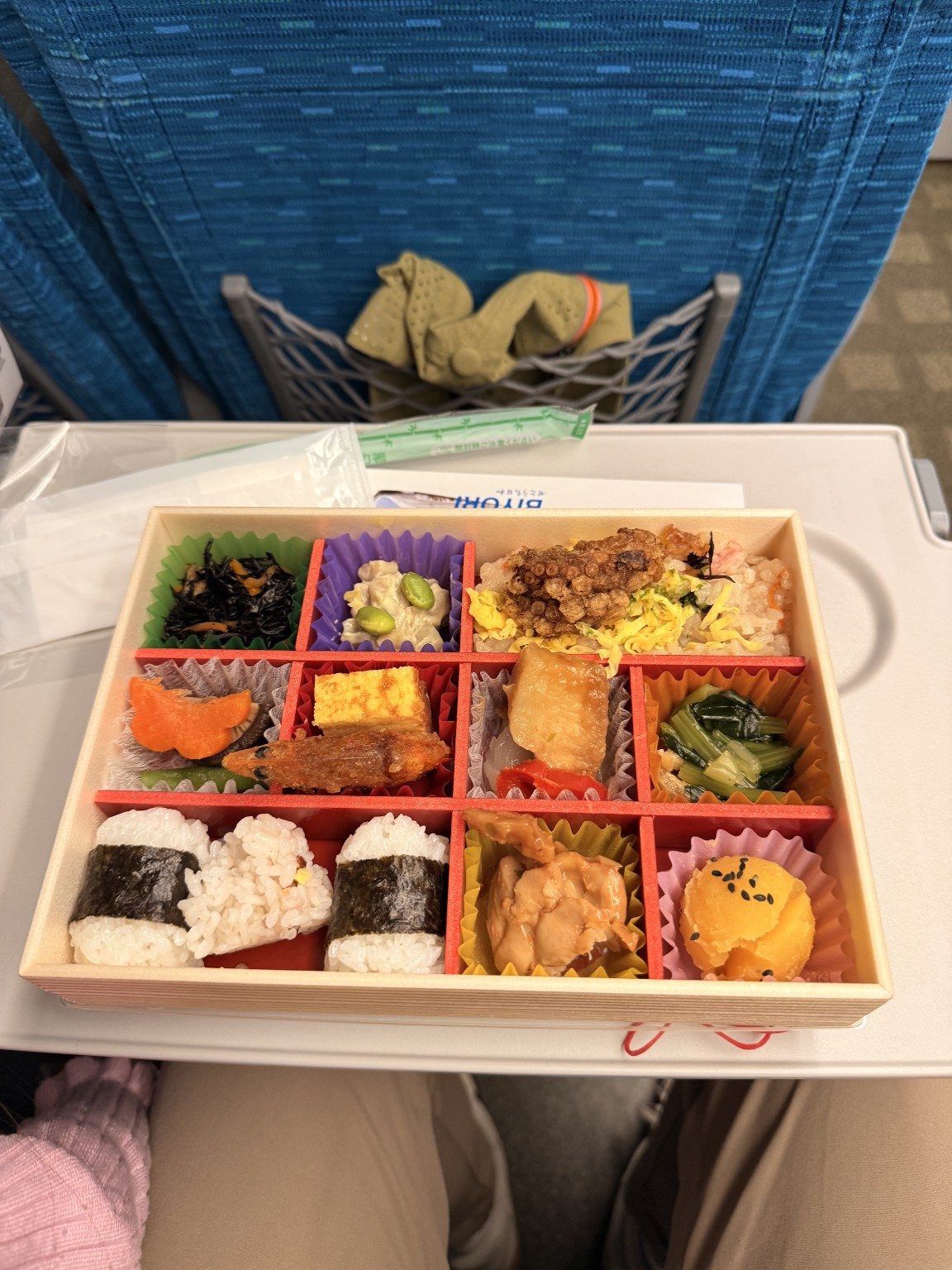
I liked the idea of treating the journey as part of the day. Moving between the Osaka and Tokyo areas is an important practical step, but it is also time you can enjoy. For a family, having the food sorted before sitting down makes the ride easier to plan. I would buy drinks before boarding too, rather than assume a trolley would come through.
There is more about choosing tickets and buying station bento in our Shinkansen guide. The useful lesson for another trip would be to leave proper time in the station. Finding the platform is more important than choosing lunch, and neither is much fun when you have left them to the last few minutes.
Mount Fuji outside the window
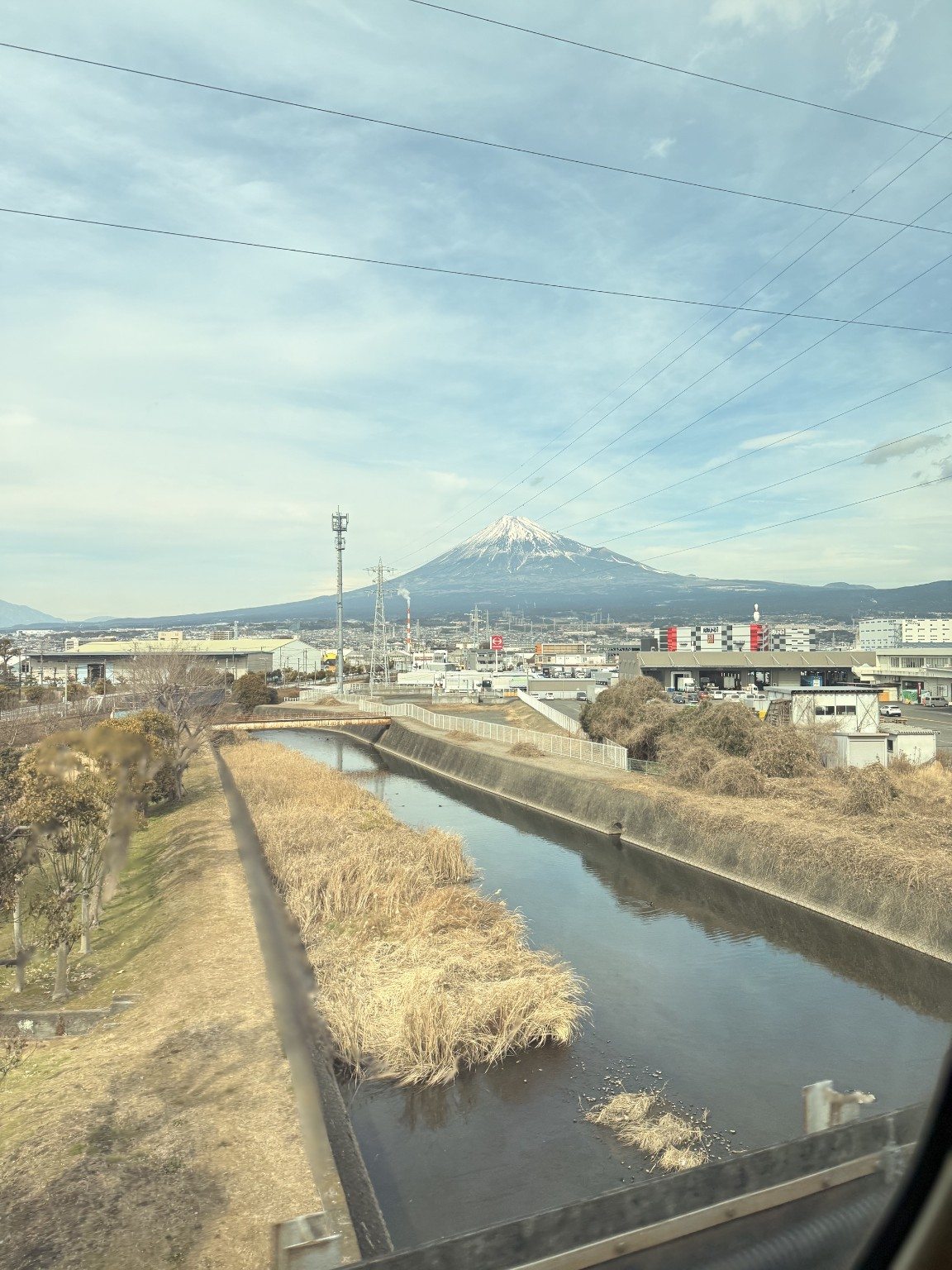
We did get a view of Mount Fuji. In the photograph, the snow-covered mountain sat beyond the town, with the river and railway wires in the foreground. I liked that it looked like a view from an actual journey. It did not need to be an isolated landscape to be worth keeping.
For a future trip, I would choose the mountain-facing window deliberately. On the usual Tokaido Shinkansen seating layout, that is E in an Ordinary car or D in a Green car. From Tokyo towards Shin-Osaka, the mountain is to the right in the direction of travel; going back towards Tokyo, it is to the left. The seat letter stays the same even though the direction changes.
Of course, the weather still decides how much you see. Our photograph is a memory from our ride, rather than a promise that a particular departure will give everyone the same view. I would book the right side and enjoy the journey regardless.
A Yokohama day belonged in the Tokyo part of the trip
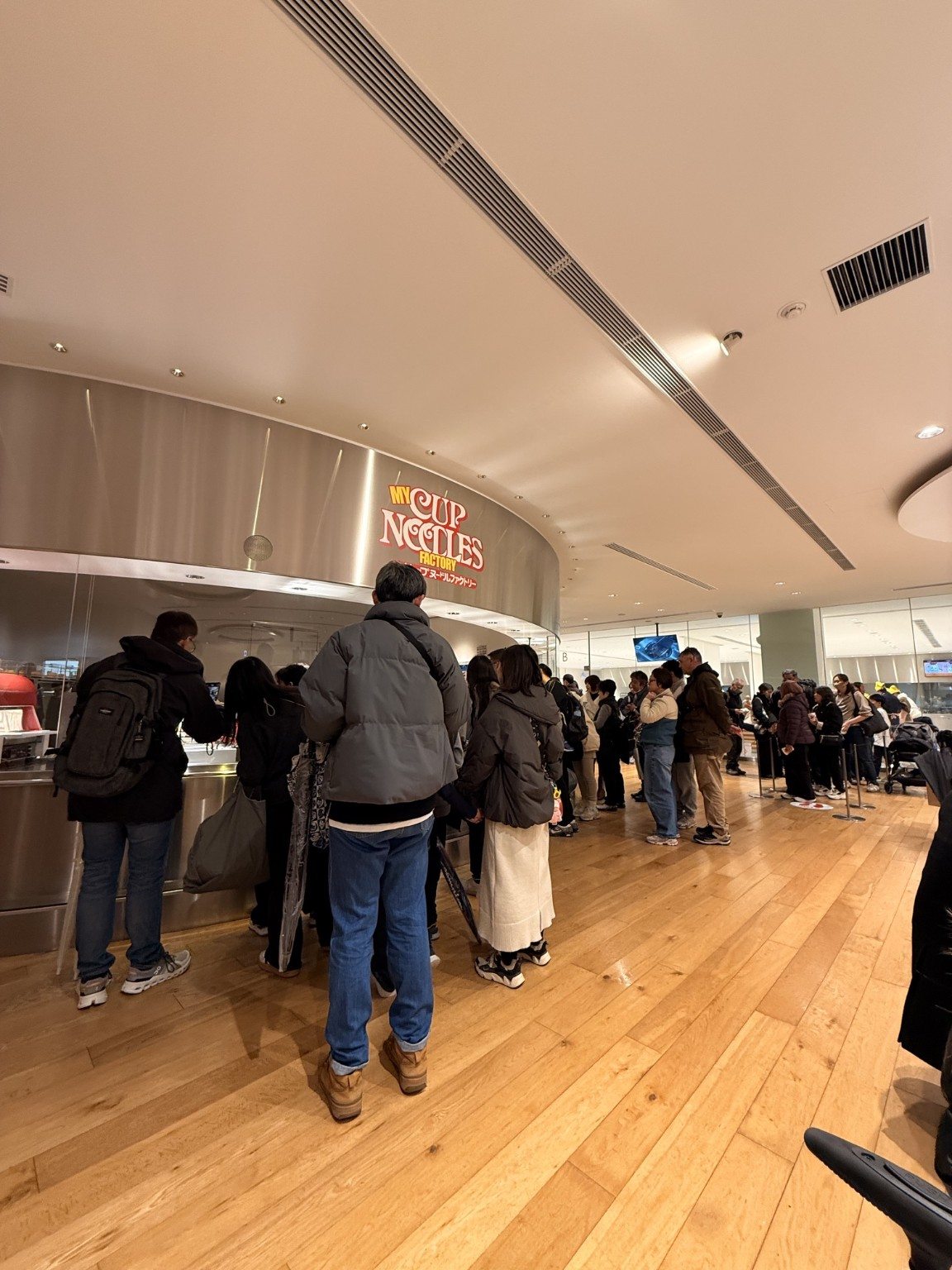
The museum photograph was from the Cup Noodles Museum in Yokohama. It showed people around the activity area, with the My CUPNOODLES Factory sign above them. That is the attraction covered in our museum guide. It is easy to confuse the name with the separate Shin-Yokohama Ramen Museum, so it is worth getting that distinction right before travelling.
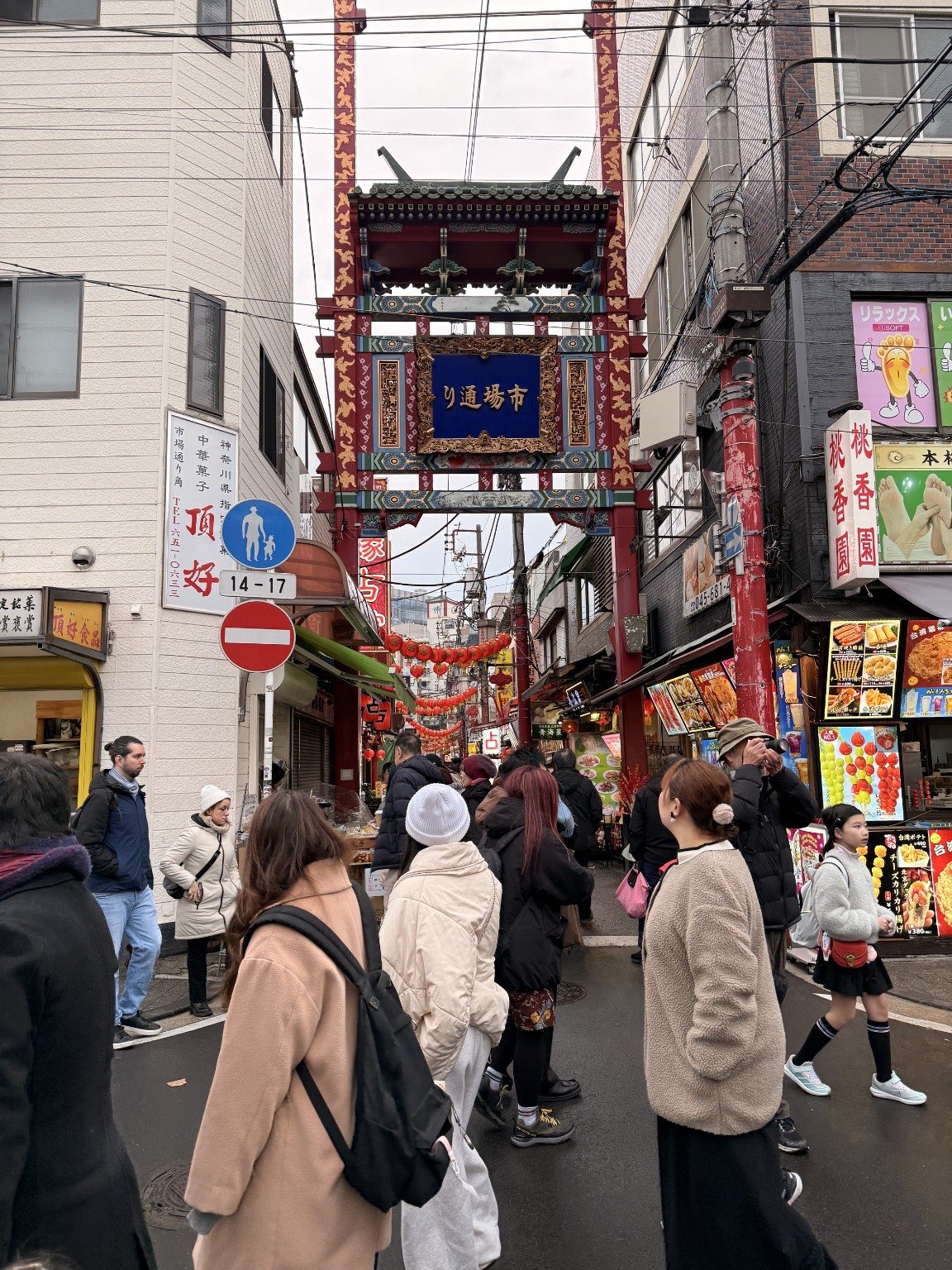
The Chinatown photograph gave us another side of Yokohama: the gate above the street, shops below and people making their way through. I would give a Yokohama day enough room for both the museum and a look around, without booking every hour around them. They are separate parts of the city, and the journey between them belongs in the plan too.
What I would keep for another four weeks
I would keep the two-base approach and give the transfer day its own space. I would also avoid using all the extra weeks to add more hotel changes. Having a longer stay is valuable because it can make the trip easier. It does not have to mean travelling farther every day.
Japan had been part of our lives for years by this trip, and these photographs added another set of memories to that history. Some were easy to recognise as highlights. Others were a meal or a detail under our feet. I wanted room for all of them here.
For the practical side, choose a one-week, two-week, three-week or four-week plan. Each uses one Osaka base and one Tokyo base, with the amount of travelling adjusted to the time available.